
A custom home is the largest purchase most Australians will make after the land it sits on, and the decision typically runs twelve to twenty-four months from first idea to signed contract. Marketing built for lead volume performs badly against that timeline, because the person filling in your form today is not buying today. They are shortlisting.
This guide covers who actually decides, why custom build marketing is a trust problem rather than a volume problem, the channels that work for this segment specifically, and what to measure across a cycle that long.
Key takeaways
- Custom build buyers research for months and shortlist three to five builders before contacting any of them.
- Your portfolio is the product. Nothing else on your site does as much work.
- Architects and building designers are the highest-value referral channel and the least systematised.
- Publish indicative ranges. Buyers use them to shortlist, and absence removes you from consideration.
- Measure enquiries worth quoting and cost per contract, never lead volume.
How do Australians actually choose a custom builder?
Custom build buyers move through a long, mostly invisible research phase. They look at completed homes, save images, read about the process, talk to people who have built, and often engage an architect or building designer before contacting a builder at all. By the time a builder receives an enquiry, the customer has usually shortlisted two to five companies based on portfolio, reviews and reputation. The enquiry is the end of the research, not the start.
That has a specific consequence. Most of your marketing has to work on someone who will never fill in a form until they are nearly ready. Content that only converts is content that misses this buyer entirely.
Who is involved in the decision?
Rarely one person, and each wants different evidence.
| Person | What they care about | What to give them |
|---|---|---|
| The primary decision maker | Whether you can build the home they picture | Portfolio depth in that style, at that size |
| The partner | Process, disruption, communication | A clearly explained build process and timeline |
| The architect or designer | Buildability, quality, whether you respect the design | Completed projects from other designers, references |
| The lender or broker | Fixed price certainty, progress payment structure | Contract type explained, staged payment schedule |
| Family or friends who have built | Reputation and horror-story avoidance | Reviews, testimonials, and being easy to check |
The last row is underrated. Nearly every Australian custom build decision passes through someone who has built before and has an opinion about it. Your reputation among people who are not your customers matters.
Why is custom build marketing different?
The cycle is long. Twelve to twenty-four months means your attribution window has to match, and a campaign judged at 30 days will look like a failure regardless of performance.
The risk is emotional as well as financial. Buyers have read about builders collapsing mid-project, cost blowouts and disputes. Reassurance about stability, licensing, insurance and contract structure does more work here than in any other trade.
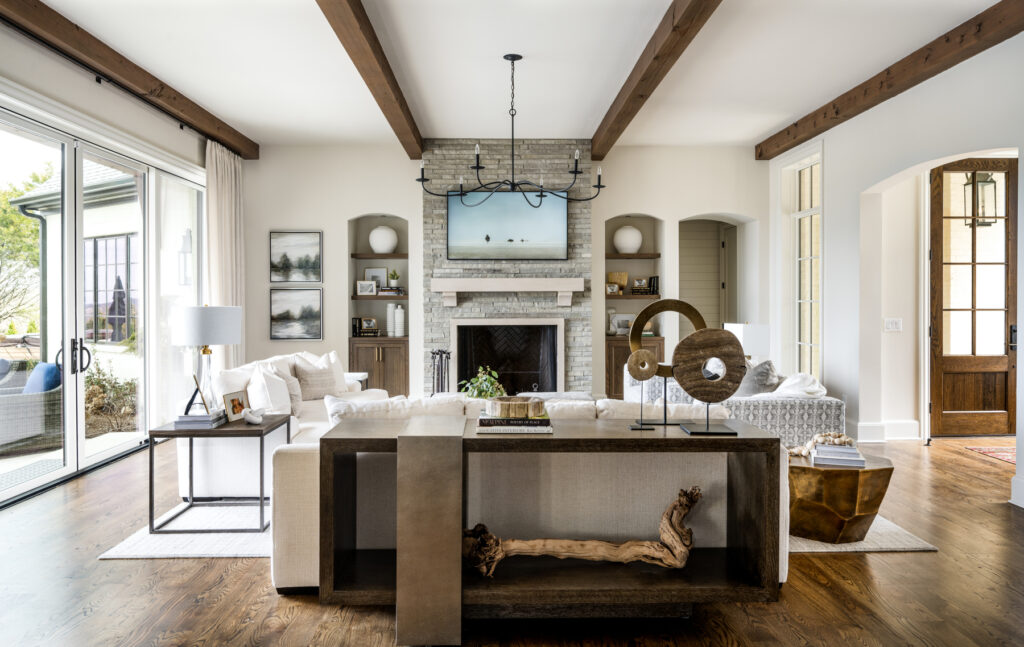
The proof is visual. Nobody buys a custom home from a paragraph. Photographs of completed homes, ideally professionally shot, are the highest-value marketing asset a custom builder can own.
The competition is capability, not price. A buyer choosing between three custom builders is comparing what each has built, not who is cheapest. If the conversation reaches price first, your portfolio has not done its job.
The game is won or lost long before the consultation.
Read the Builder's Growth Playbook→Which channels work for custom builders?
| Channel | Fit | Why |
|---|---|---|
| Architect and designer referrals | Highest | Design comes before builder selection on most custom projects |
| Instagram and Pinterest | High | Visual discovery during the research phase, saved and returned to |
| Organic search | High | Long research phase means many informational searches |
| Google Business Profile | High | Appears above organic on local builder searches |
| Google Ads | Medium | Works when structured to custom build terms only |
| Past client referrals | High | Custom clients talk to people considering the same thing |
| Lead marketplaces | Low | Shared leads and price competition suit this segment poorly |
| Display and general social | Low | Wrong context for a purchase this considered |
Architects and building designers
Treat this as a business development function rather than a marketing channel. Identify the designers working in your area and price bracket, build genuine relationships, build one of their designs exceptionally well, and photograph it properly for both of you.
Two or three of these relationships will out-produce every paid channel a custom builder runs. Very few builders work at it deliberately.
Instagram and Pinterest
The custom build research phase is visual and it happens on these platforms. Post completed work consistently, show process rather than only finished results, and use location and style tags that match how people search. This is discovery rather than conversion, and the return arrives eighteen months later when they call.
Organic search
Custom build buyers search extensively during research. The queries worth owning:
- Custom home builder [suburb or region]
- How much does it cost to build a custom home in [city]
- Custom builder vs project builder
- How long does it take to build a custom home
- What is a fixed price building contract
- Knockdown rebuild vs renovate
- How to choose a custom home builder
Each is a page or a clearly headed section with a direct answer beneath it. Our SEO guide for builders covers the structure.
What does a custom builder’s website need?
A portfolio organised by style and size, not chronologically. Buyers self-select. Someone wanting a single-storey contemporary home should be able to see only those in two clicks.
Enough photographs per project. Ten to twenty images of a completed home, including detail shots. Three photos reads as a builder with little to show.
The process explained end to end. Initial consultation, design, tender or fixed price, council approval, construction stages, handover, defects period. Custom buyers are anxious about the unknown and clarity converts.
Indicative ranges. Publish a per-square-metre range or a starting point with a clear explanation of what moves it: slope, soil classification, access, level of finish, structural complexity, council pathway. Buyers use ranges to shortlist. A builder with no published range is often excluded before contact.
Credentials visible. Licence number, insurance, association membership, warranty. Cheap to display, disproportionately reassuring.
A qualification form, not a contact form. Project type, land status, design status, suburb, budget range, timeline. Custom build estimating is expensive and your form should protect it.
Our web design services cover the build side of this.
What should you measure?
| Metric | Why |
|---|---|
| Enquiries worth quoting | The only meaningful volume number |
| Enquiry to consultation rate | Whether your site attracts real buyers |
| Consultation to contract rate | Whether your pitch and pricing land |
| Cost per signed contract | The number that governs budget |
| Average contract value by source | Which channels bring the projects you want |
| Referral source mix | Whether the architect channel is growing |
| Time from first touch to contract | Sets your attribution window |
What are the common mistakes?
Marketing custom builds like renovations. Different buyer, different timeline, different proof.
A thin portfolio. The single most common reason a custom builder loses a shortlist place.
No published range. You are removed from consideration silently, and you never find out.
Neglecting the design professional channel. The highest-value relationships in the segment, and most builders leave them to chance.
Judging campaigns on a 30-day window. The cycle is twelve to twenty-four months. Your reporting has to match it or you will kill working campaigns.
Chasing enquiry volume. Ten qualified custom enquiries beat a hundred that cannot fund a build.
Free Download
The Builder’s Growth Playbook
- The system builders use to turn $50k in ad spend into $5M to $15M in contracted work
- Why the best clients in your market are choosing builders worse than you
- The five mistakes that destroy the result before it has a chance to work
What we recommend
Invest in the portfolio first. Professional photography of your last three completed homes will do more for a custom builder than any campaign, because it is the asset every other channel depends on. Instagram needs it, your website needs it, your architect relationships need it, and your Google Business Profile needs it.
Then build the design professional channel deliberately rather than hoping referrals arrive. Then publish ranges and the process. Then run search on the terms that only custom buyers use.
Set your attribution window to the real cycle before you judge anything, and report on enquiries worth quoting rather than enquiries received.
Frequently asked questions
How long is the custom home building sales cycle in Australia?
Commonly twelve to twenty-four months from first research to signed contract, longer where land purchase or a complex planning pathway is involved. Set marketing attribution windows to match, because a campaign assessed at 30 days will appear to fail even when it is producing the pipeline.
Should custom home builders publish prices?
Publish an indicative range with a clear explanation of what moves it. Buyers use ranges to build a shortlist, and a builder with nothing published is frequently excluded before making contact. A range plus honest context about site conditions, finishes and complexity qualifies enquiries before they reach your estimator.
How do custom builders get architect referrals?
Deliberately, over time. Identify the designers working in your area and price bracket, build one of their designs exceptionally well, photograph it properly and share it with them, and stay in contact between projects. This is business development rather than marketing, and it produces the highest-value work in the segment.
Do custom home builders need Google Ads?
They can work when restricted to custom build terms and paired with a landing page showing completed custom homes. The bigger returns for this segment usually come from portfolio, referrals and organic search, because the buyer is researching for months rather than converting on a click.
What is the most important page on a custom builder’s website?
The portfolio, organised so a visitor can filter to homes resembling what they picture. It is the asset every other channel depends on and the most common reason a builder loses a shortlist place.
How many enquiries does a custom builder need?
Very few, correctly qualified. A builder running four to six custom projects a year needs a small number of genuine enquiries with land, design intent and funding in place. Optimising for volume in this segment produces estimating work rather than contracts.
Want more custom build enquiries worth quoting?
We build marketing systems for Australian custom home builders: portfolio-led websites, project-type campaigns, qualification forms and content built for a twelve-month research cycle.
See our construction marketing services or book a free construction marketing audit.