
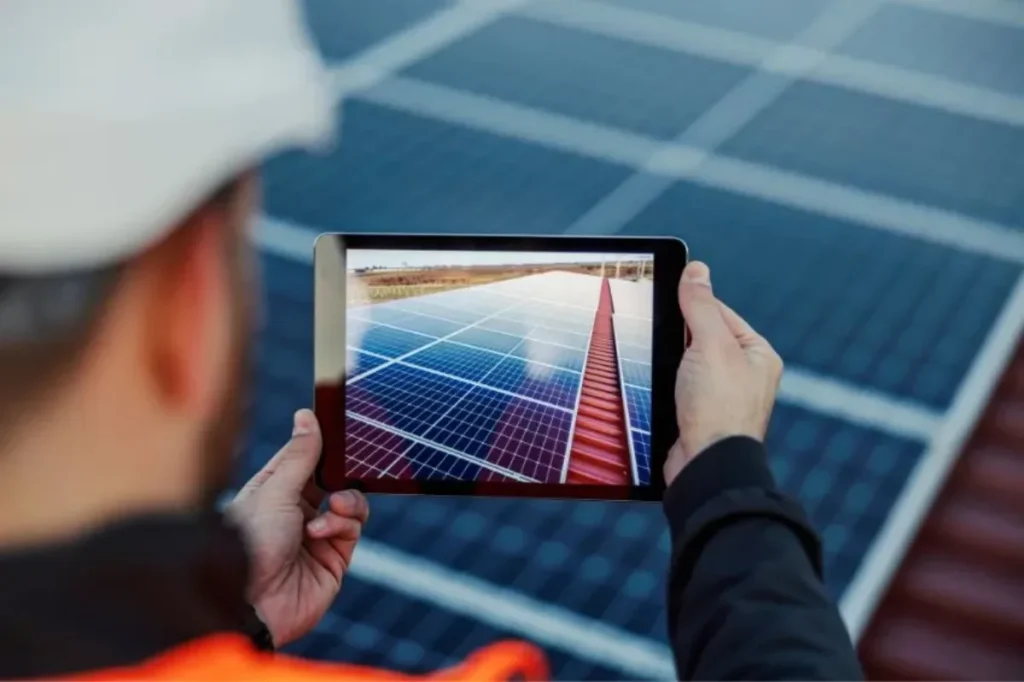
A solar marketing strategy in Australia is not the same as marketing in most other markets, and treating it like generic lead generation is how installers end up burning cash. We have some of the highest rooftop solar penetration in the world, brutal price competition, a real trust deficit left behind by dodgy operators, and a demand curve that swings with rebates and the weather. This guide pulls the whole picture together: the unit economics, the customer journey, the channel mix, budgeting, measurement, seasonality, the battery upsell and compliance, finishing with a simple 90-day plan you can start on Monday.
This guide is written for owners and marketing managers of Australian solar installation companies. It is a strategy overview rather than a sales pitch, and it links out to deeper guides on each topic so you can go further wherever you need to.
What this guide covers
- Why solar marketing in Australia is different
- Start with the numbers, not the tactics
- Map the solar customer journey
- The channel mix that works for solar
- Owned leads versus bought and aggregator leads
- How much should you spend
- Measurement: GA4, call tracking and attribution
- Seasonality and demand planning
- Batteries, EV chargers and the upsell engine
- Compliance: CEC accreditation and ACCC rules
- Commercial versus residential
- A simple 90-day action plan
Key takeaways
- Build your strategy on unit economics first. If you do not know your cost per lead, close rate and customer value, no channel choice will save you.
- The strongest results come from a mix: local SEO and Google Business Profile to capture demand, GEO so AI assistants name you when buyers ask for an installer, Google Ads for high intent, and Meta to create demand.
- Owned leads compound and stay exclusive to you. Shared aggregator leads can fill gaps but rarely build a durable business.
- Trust is the real product. Reviews, transparent pricing and a credible website beat being the cheapest.
- Plan for seasonality and the battery upsell. Both can smooth revenue and lift the value of every customer you already won.
Why solar marketing in Australia is different
Australia is one of the most solar-saturated markets on earth. Rooftop systems are a normal feature of suburban streets, not a novelty, and you can see how dense adoption has become on the live maps published by the Australian PV Institute. High penetration is good news in that the category is proven and households understand the basics. It is bad news in that you are rarely selling the idea of solar itself. You are selling why your install, on this roof, with this warranty, is the right choice over a dozen other quotes.
That leads straight into the second feature of the market: intense price competition. Comparison sites, aggregators and a flood of advertising have trained buyers to collect multiple quotes and treat panels as a commodity. If your entire pitch is a dollar figure, you will be undercut by someone willing to cut corners. The installers who thrive compete on trust, workmanship and after-sales support instead, which is the subject of our guide on how solar installers win without being the cheapest.
Third, there is a genuine trust deficit. The industry has a long memory of phoenix operators, hard-sell door knockers and warranties that vanished with the company. Buyers are wary, and that wariness is your biggest marketing obstacle and your biggest opportunity. Whoever reduces perceived risk fastest tends to win the job.
Finally, demand is shaped by policy and weather. Small-scale Technology Certificates, state rebates and battery incentives move purchasing decisions, and you can track the schemes through the Clean Energy Council and the Clean Energy Regulator. Layer on strong seasonality, with enquiry spikes in spring and after summer bill shock, and you have a market that rewards installers who plan their marketing around the calendar rather than reacting to it.
Start with the numbers, not the tactics
Most installers ask which channel to use before they know whether any channel can be profitable for them. Reverse that. A solar marketing strategy is really a financial model with creative attached, and the model comes first.
There are five numbers you need to know cold:
- Cost per lead. What it costs to generate one genuine enquiry through a given channel.
- Lead to quote and quote to install rates. How many enquiries become quotes, and how many quotes become signed jobs. This is your close rate, and it is where most money is won or lost.
- Cost per acquisition. Your total marketing spend divided by installs won. A high cost per lead can still be fine if your close rate is strong, and a cheap lead is worthless if it never converts.
- Average customer value. Not just the panel job, but the realistic value once you include batteries, referrals and future upgrades.
- Payback period. How long it takes a new customer to repay the cost of acquiring them, which tells you how aggressively you can spend.
The point of mapping these is to stop arguing about cost per lead in isolation. A channel that delivers a more expensive but higher intent enquiry can be far more profitable than a cheap source of tyre-kickers. We unpack this trade-off in detail in lead quality versus quantity, and you can sanity check your figures against the wider market in our 2026 solar cost per lead benchmarks.
Rule of thumb: if you do not yet have clean numbers, instrument them before you scale spend. Two weeks of honest tracking on close rate alone will change which channels you back.
Map the solar customer journey
Solar is a considered purchase. People rarely see an ad on Monday and sign on Tuesday. They move through a journey that can run from a few weeks to several months, and your marketing needs to meet them at each stage rather than shouting buy now at strangers.
A simplified journey looks like this:
- Awareness. A trigger, often a high power bill or a neighbour getting panels, makes someone curious. They are not ready to buy, they are ready to learn.
- Research. They search for system sizes, payback, brands and local installers, read reviews and start forming a shortlist.
- Consideration. They request quotes, compare proposals and weigh price against trust and warranty.
- Decision. They choose an installer, usually the one who feels lowest risk for a fair price.
- Post-install. They go live, hopefully refer friends, and become a candidate for a battery or EV charger later.
Different channels do different jobs along this path. GEO and content build awareness and shape the shortlist, Meta adds reach, search captures research and consideration, and your website and quote process close the decision. We break the stages down further in our guide to the solar customer journey, and the way you handle the final click matters enormously, which is why landing page best practices deserve their own attention. If your strategy only funds the decision stage, you will fight everyone else for the same shrinking pool of ready-to-buy searchers.
The channel mix that works for solar
There is no single best channel, only the right combination for your margins, your area and how fast you need leads. Think of it as a portfolio where each channel plays a role. Below is how the main options compare.
| Channel | Primary job | Speed to leads | Best for |
|---|---|---|---|
| Local SEO and Google Business Profile | Capture nearby searchers | Weeks to months | Steady, lower-cost enquiries in your service area |
| GEO (AI search visibility) | Get named when buyers ask ChatGPT or Google’s AI Mode for an installer | Weeks to months, then compounds | Shortlist inclusion during research and consideration, and commercial enquiries |
| Organic SEO and content | Build authority and trust | Months, then compounds | Long-term lead flow and lower cost per acquisition |
| Google Ads | Capture high intent on demand | Days | Immediate quote requests when you can spend |
| Meta and Facebook Ads | Create demand and stay visible | Days to weeks | Filling the top of the funnel and battery offers |
| Reviews and reputation | Reduce perceived risk | Ongoing | Lifting close rate across every other channel |
| Email and SMS nurture | Convert and re-engage | Ongoing | Slow deciders and past customers |
| Referrals | Lowest-cost, highest-trust leads | Ongoing | Margin-friendly growth from happy customers |
Local SEO and Google Business Profile
For most residential installers this is the highest-return starting point. People searching for solar in your suburb are deep in the research and consideration stages, and ranking in the local map pack puts you in front of them at low cost. A complete, active Google Business Profile with regular posts, photos of real installs and a steady flow of reviews is the foundation. Our guide to local SEO for solar installers covers how to make it rank in your suburbs.
Organic SEO and content
Content is how you earn trust before a sales conversation and reduce your reliance on paid clicks over time. Answering the real questions buyers ask, about payback, system sizing, batteries and rebates, builds the authority that ranks pages and gets you cited by AI answer engines. This is a compounding asset rather than an instant tap, which is why it sits at the centre of a mature strategy. Start with SEO for solar companies. If you want it managed, our SEO service is built for this.
GEO and AI search
More buyers now ask an AI assistant which installer to use, and the answer names a shortlist. In our August 2026 testing, SolarQuotes appeared in 14 of 16 AI answers about Australian solar, while installer websites took 97 per cent of ChatGPT’s citations on commercial queries. Getting named means stating accreditation, price ranges and project numbers in plain text and keeping your registers and comparison profiles aligned. See SolarQuotes and AI shortlists, answer engine optimisation for solar and how we get solar companies into AI answers.
Google Ads
When you need leads this week, search ads put you in front of people typing solar quote and installer near me. The intent is high, but so is the competition, and wasted spend is common. The fix is tight targeting, honest landing pages and disciplined negative keywords. We cover the approach in Google Ads for solar companies, and you can hand it to our Google Ads team if you would rather not learn it the hard way.
Meta and Facebook Ads
Search captures existing demand, but Meta creates it. A well-built Facebook and Instagram funnel reaches homeowners before they have started actively shopping, which is exactly where battery and bill-shock offers land well. Done badly it produces cheap, low-quality enquiries, so creative and offer matter. See the Meta ads playbook for solar companies, or talk to our Facebook Ads team.
Reviews, website and nurture
These three quietly decide whether the rest of your spend pays off. Reviews reduce risk, so a deliberate system for earning them lifts the close rate of every other channel; start with solar reviews and reputation management and the practical steps in getting more Google reviews. Your website is where all that traffic either converts or leaks away, which is why solar company website design and broader conversion rate work repay the investment fast. A clean, fast, trustworthy site built by a specialist web design team is not a vanity project, it is your hardest-working salesperson. Finally, email and SMS nurture keep you front of mind with the slow deciders who make up most of the market.
Owned leads versus bought and aggregator leads
One of the biggest strategic decisions you will make is where your leads come from. Bought leads, especially shared leads from aggregators, are sold to several installers at once. They can fill a quiet calendar quickly, but you are competing on speed and price the moment they land, close rates tend to be lower, and you never own the relationship or the data.
Owned leads come directly to you through your SEO, website, ads, reviews and referrals. They cost more to build at first, but they are exclusive, they compound, and they carry far more trust because the customer chose you rather than filling in a comparison form. A durable strategy treats bought leads as a top-up at most, and invests steadily in owned channels. We make the full case in how to get solar leads without shared leads, weigh the trade-offs in aggregator versus direct leads, and lay out the fundamentals in solar lead generation in Australia.
5core numbers every installer should track before scaling spend
4channels that form the backbone: local SEO, GEO (AI search), Google Ads and Meta
90days to stand up a working strategy with the plan below
How much should you spend
The honest answer is that there is no universal percentage. Copying a competitor’s budget tells you nothing about whether it is profitable. Instead, work backwards from the model you built earlier. Decide how many installs you want next quarter, divide by your close rate to get the number of leads required, then multiply by your realistic cost per lead. That gives you a spend target the math actually supports.
From there, a few principles keep you sane. Spend more where the unit economics are proven and less where they are not. Protect a portion of budget for owned channels like SEO and GEO that pay back slowly but reduce future costs. And treat your customer value, including likely battery and referral revenue, as the ceiling for what an acquisition can cost. We walk through the full method, with worked scenarios, in how much solar installers should spend on marketing.
Measurement: GA4, call tracking and attribution
You cannot manage what you cannot measure, and solar marketing is full of leaks that hide in plain sight. The most common is the phone call. A large share of solar enquiries come by phone, and if those calls are not tracked, the channels that drive them look worthless in your reports while you quietly cut the wrong spend.
A workable measurement stack has three layers. GA4 with proper conversion tracking captures form fills and key on-site actions; our guide to GA4 conversion tracking shows how to set it up so the data is trustworthy. Call tracking attributes phone enquiries to the right source so search and offline channels get the credit they earn. And a simple attribution view ties spend to leads, leads to installs, and installs to revenue, so you can compare channels on cost per acquisition rather than vanity clicks. Keep it simple enough that you will actually look at it weekly.
Seasonality and demand planning
Solar demand is not flat across the year. Enquiries tend to climb in spring as households prepare for summer, surge again after the first big summer bills land, and soften through the depths of winter in cooler states. Rebate announcements and changes to incentive schemes create their own spikes, which is another reason to keep an eye on the Clean Energy Regulator for scheme updates.
The strategic move is to plan around the curve rather than be surprised by it. Build awareness and capture demand through content, GEO and Meta during quieter months so you are top of mind when intent rises, lean into search and conversion spend during peaks, and use slow periods to push batteries and maintenance to your existing base. We map the calendar month by month in seasonal solar marketing in Australia so you can match budget to demand instead of chasing it.
Batteries, EV chargers and the upsell engine
Some of the most profitable marketing you can do is to people who have already bought from you. Battery storage, system expansions and EV chargers carry strong margins, and your existing customers already trust you, which collapses the cost of acquisition. As battery incentives grow and more households add electric vehicles, this becomes a structural advantage rather than a nice-to-have.
Treat your customer base as an asset. A simple programme of follow-up emails, targeted offers and timely outreach when incentives change can turn a one-off panel sale into a multi-year relationship. We cover the playbook in marketing solar batteries to existing customers and the wider category in solar battery marketing in Australia. The upsell engine also lifts your average customer value, which, as we saw in the numbers section, raises the ceiling on what you can afford to spend winning the first sale.
Compliance: CEC accreditation and ACCC advertising rules
Compliance is not red tape, it is a trust signal you can market with. Clean Energy Council accreditation and approved products are what many rebates and the Small-scale Technology Certificate scheme require, and displaying your credentials clearly reassures wary buyers. You can point customers to the Clean Energy Council to verify accreditation, which turns a regulatory requirement into a selling point.
Your advertising also has to be truthful. The ACCC enforces Australian Consumer Law, and the solar sector has drawn scrutiny over misleading claims about savings, rebates and pricing. Be careful with savings figures, rebate language and limited-time pressure tactics. Claims should be substantiated and not create a false sense of urgency. We go deeper on the specifics for ads in CEC and ACCC compliance for solar ads. Getting this right protects you from penalties and, just as importantly, separates you from the operators that made buyers cautious in the first place.
Commercial versus residential
Residential and commercial solar are different businesses wearing the same uniform, and a strategy that blurs them tends to underperform at both. Residential is higher volume, shorter sales cycles, and driven by trust, reviews and local visibility. Commercial involves longer cycles, multiple decision makers, larger system values and a buying conversation centred on return on investment, finance and energy security rather than household bill savings.
That changes the channel mix. Commercial leans more on search for specific terms, GEO, LinkedIn-style targeting, case studies and direct outreach, with content that speaks to facility managers and business owners. If commercial is part of your plan, build it as its own track with its own messaging and metrics.
A simple 90-day action plan
You do not need to do everything at once. Here is a sequence that builds a working strategy from the foundations up. Adjust the pace to your capacity, but keep the order, because each step makes the next one work harder.
- Days 1 to 15: instrument the numbers. Set up GA4 conversion tracking and call tracking, and start recording cost per lead, close rate and customer value. You cannot improve what you are not measuring.
- Days 1 to 30: fix the foundations. Claim and fully optimise your Google Business Profile, audit your website for speed, clarity and trust signals, and make sure every page makes it obvious why you are low risk.
- Days 15 to 45: get AI-ready (GEO). State your NETCC approval and your installers’ SAA accreditation exactly as registered, plus your service areas and a price range, in plain text. Align your SolarQuotes and Google profiles to the same business name, and start a monthly AI prompt panel.
- Days 15 to 45: launch demand capture. Turn on a tightly targeted Google Ads campaign pointed at a dedicated landing page so you have immediate, measurable lead flow while slower channels build.
- Days 30 to 60: build the review engine. Put a repeatable system in place to ask every happy customer for a review and to collect testimonials you can reuse across the site and ads.
- Days 30 to 90: invest in owned channels. Begin publishing genuinely useful content, strengthen local SEO, and start a simple email and SMS nurture sequence for slow deciders and past customers.
- Days 60 to 90: add demand creation and the upsell. Layer in a Meta funnel to fill the top of the funnel, and launch a battery offer to your existing customer base.
- Day 90: review and reallocate. Compare channels on cost per acquisition, double down on what works, cut what does not, and plan the next quarter around the seasonal curve.
If you would rather not run all of this in-house, it is worth understanding what good looks like before you hire, which is exactly what we cover in choosing a solar marketing agency.
Want a solar marketing strategy built around your numbers?
Uprise Digital helps Australian solar installers turn GEO, SEO, Google Ads, Meta and conversion-focused websites into a profitable, measurable pipeline of owned leads.
Explore our solar marketing services
Frequently asked questions
What is the best marketing channel for solar installers in Australia?
There is no single best channel. Most successful Australian installers combine local SEO and a strong Google Business Profile to capture people already searching, GEO so ChatGPT and Google’s AI Mode name them when buyers ask for an installer shortlist, Google Ads to capture high-intent demand, and Meta or Facebook Ads to create demand and stay visible. The right mix depends on your service area, margins and how fast you need leads. Start with the channels closest to a buying decision, prove the unit economics, then expand.
How much should a solar company spend on marketing?
Work backwards from your numbers rather than copying a percentage. Decide how many installs you want, your close rate and your target cost per acquisition, then set a budget that the math supports. Many established installers reinvest a meaningful share of gross profit into marketing, but the figure that matters is whether each dollar returns a profitable customer once you account for close rate and customer value.
Are aggregator or shared solar leads worth buying?
Shared leads can fill a calendar quickly, but they are sold to several installers at once, so close rates and margins are usually lower and you do not own the relationship. They can work as a top-up while you build owned channels, but a durable strategy invests in leads that come directly to you through SEO, your website, ads and referrals, because those compound over time and are exclusive to you.
How long does SEO take to generate solar leads?
Local SEO and a well optimised Google Business Profile can produce calls within weeks in less competitive suburbs, while ranking organic content and city-level pages usually takes several months of consistent work. SEO is a compounding asset rather than an instant tap, so most installers run paid channels for immediate leads while SEO builds in the background.
What metrics should solar installers track?
Track cost per lead, lead to quote rate, quote to install close rate, cost per acquisition, average customer value and marketing return on investment by channel. Use GA4 with proper conversion tracking and call tracking so phone enquiries are attributed correctly. These numbers tell you which channels to scale and which to cut.