
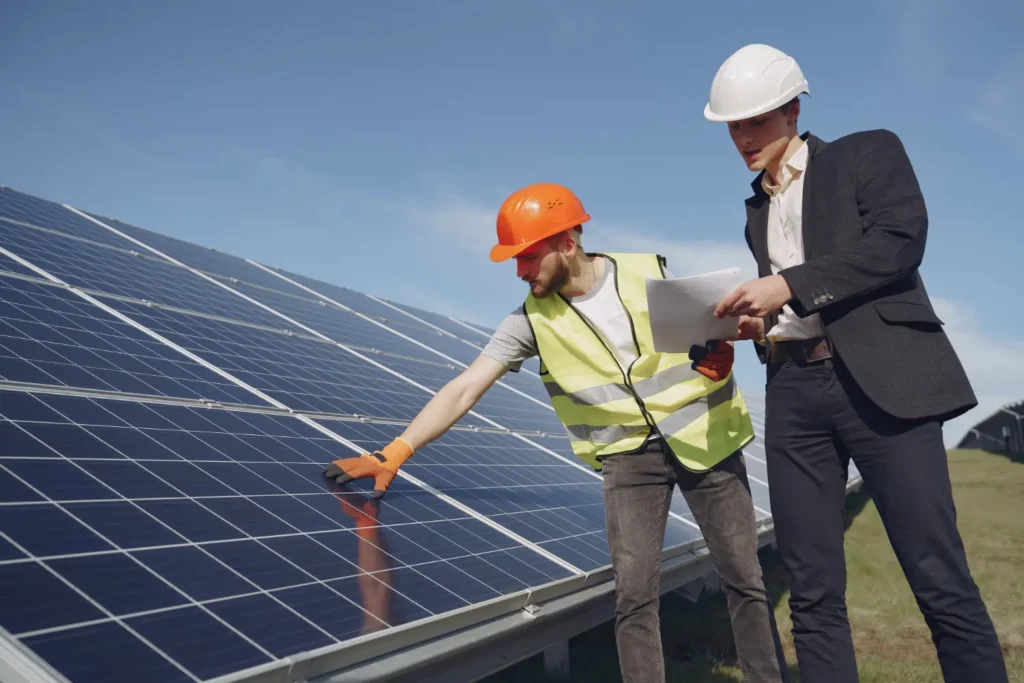
Google Ads for solar companies in Australia is one of the most effective ways to generate qualified leads in 2026. With over 3.7 million Australian households now running rooftop solar and the Clean Energy Regulator reporting record installations throughout 2025, competition between solar installers has never been fiercer. The companies winning are the ones showing up at the exact moment a homeowner searches “solar panel installation near me” or “best solar installer in Brisbane.”
This guide breaks down exactly how Australian solar businesses can build, optimise, and scale profitable Google Ads campaigns. Whether you are spending $2,000 or $20,000 per month, these strategies are based on real campaign data from solar advertisers across Sydney, Melbourne, Brisbane, Perth, and Adelaide
Why Google Ads Work for Solar Companies in Australia
Solar is a high-intent purchase. Homeowners do not casually browse for $8,000 to $15,000 solar systems. When someone types “solar panel installation Sydney” into Google, they are actively researching a purchase. That intent makes Google Ads uniquely powerful for solar lead generation.
The Australian solar market has specific characteristics that favour paid search:
- Seasonal demand spikes in spring and summer create predictable windows for scaling ad spend
- Government rebates (STCs and state-level incentives) create urgency that drives conversion rates higher
- Local search intent is dominant, with most buyers wanting an installer within their city or region
- The average solar system sale ($7,000 to $12,000 residential) supports strong return on ad spend even with CPCs of $8 to $20
According to industry benchmarks, Australian solar companies running well-optimised Google Ads campaigns achieve a cost per lead between $35 and $85, with cost per acquisition (signed contract) ranging from $250 to $600. Compare that to buying leads from aggregator sites at $50 to $120 per lead with lower close rates, and the economics are clear.
How Much Do Solar Google Ads Cost in Australia?
Understanding Google Ads costs for solar in Australia requires looking at several metrics. Costs vary significantly by location, competition, and campaign quality.
| Metric | Australian Average (2026) | Top Performers |
| Cost Per Click (CPC) | $8 – $22 | $5 – $12 |
| Cost Per Lead (CPL) | $45 – $95 | $25 – $55 |
| Cost Per Acquisition | $350 – $700 | $180 – $400 |
| Conversion Rate (click to lead) | 3% – 7% | 8% – 15% |
| Lead to Sale Rate | 15% – 25% | 25% – 40% |
| Monthly Budget (competitive) | $3,000 – $15,000 | $10,000 – $30,000+ |
Sydney and Melbourne have the highest CPCs due to installer density. Regional areas and smaller cities like Hobart, Darwin, and Canberra offer significantly lower costs with less competition. Smart solar advertisers allocate budget strategically across geographies rather than concentrating everything in one metro area.
What Drives CPC Variation?
- Location targeting: metro vs regional areas
- Time of year: CPCs spike 20-35% in September through January
- Quality Score: advertisers with high Quality Scores pay 30-50% less per click
- Ad position: position 1 costs roughly 40% more than positions 2-3
- Device: mobile CPCs are typically 15-20% lower than desktop for solar queries
Campaign Structure: The Right Way to Set Up Solar Ads
Poor campaign structure is the number one reason solar companies waste money on Google Ads. A well-organised account separates campaigns by intent, service type, and geography.
Recommended Campaign Architecture
Your Google Ads account should include these core campaigns:
- Brand Campaign: captures searches for your company name (low CPC, high conversion)
- High-Intent Campaign: targets “solar installer,” “solar panel installation,” “solar quotes” keywords
- Product-Specific Campaign: targets “Tesla Powerwall,” “battery storage,” “6.6kW solar system” searches
- Location Campaigns: separate campaigns for each major service area (Sydney, Melbourne, Brisbane, etc.)
- Competitor Campaign: bids on competitor brand names (use cautiously and monitor ROI)
Each campaign should have tightly themed ad groups with no more than 15 to 20 keywords per group. This structure ensures your ads are highly relevant to each search query, which directly improves Quality Score and lowers your CPC.
Match Types for Solar Keywords
In 2026, Google has further refined how match types work. For solar campaigns:
- Phrase match for core terms like “solar panel installation” and “solar installer near me”
- Exact match for your highest-converting, most expensive keywords
- Broad match only with Smart Bidding and strong conversion data (50+ conversions per month minimum)
Keyword Strategy for Solar PPC Campaigns
Keyword selection makes or breaks a solar Google Ads campaign. The goal is to capture searches from people ready to buy, not those doing casual research.
High-Intent Keywords (Priority Tier 1)
- “solar panel installation [city]”
- “solar installer near me”
- “solar quotes [city]”
- “best solar company [city/state]”
- “solar panel cost Australia”
- “6.6kW solar system price”
- “solar battery installation [city]”
Product and Feature Keywords (Priority Tier 2)
- “Tesla Powerwall installer [city]”
- “Enphase microinverter solar”
- “solar and battery package Australia”
- “commercial solar installation [city]”
- “solar panel upgrade”
Informational Keywords (Priority Tier 3 – Use for Display/YouTube)
- “how much do solar panels cost in Australia”
- “solar rebates [state] 2026”
- “is solar worth it in [city]”
- “solar panel payback period Australia”
Do not bid on informational keywords in Search campaigns. These queries have low purchase intent and will inflate your CPL. Instead, target them through blog content, YouTube ads, or Display remarketing.
Negative Keywords Are Critical
Solar campaigns attract irrelevant clicks without a strong negative keyword list. Add these from day one:
- “DIY,” “how to install yourself,” “second hand,” “used”
- “jobs,” “careers,” “salary,” “training,” “course”
- “free solar panels,” “government free solar”
- “solar farm,” “solar energy stocks,” “solar power plant”
- “reviews” (unless you have a dedicated reviews landing page)
Writing Ad Copy That Converts for Solar
Your ad copy needs to do three things in a few seconds: establish credibility, communicate value, and drive action. Solar buyers are comparing multiple installers simultaneously.
Ad Copy Framework for Solar Companies
Headline 1: Primary keyword + location (e.g., “Solar Installation Sydney”)
Headline 2: Key differentiator (e.g., “CEC-Accredited | 10-Year Warranty”)
Headline 3: Call to action (e.g., “Get Your Free Quote Today”)
Description 1: Expand on your value proposition. Include specific offers, rebate mentions, or social proof.
Description 2: Reinforce trust signals and urgency. Mention years in business, number of installations, or limited-time pricing.
What Makes Solar Ad Copy Convert
- Mention specific rebate amounts: “Save Up to $2,800 with STCs in 2026”
- Include social proof: “4,500+ Installations Across NSW” or “4.9 Stars on Google”
- Name-drop premium brands: “Authorised SunPower & Tesla Installer”
- Use numbers: specific wattage, savings amounts, warranty years
- Create urgency: “STC Rebate Reduces in April” or “Limited Spots This Month”
Use all available ad extensions: sitelinks (link to product pages, reviews, about us), callout extensions (“CEC Accredited,” “Interest-Free Finance”), structured snippets (brands, service types), call extensions, location extensions, and price extensions.
Landing Pages That Turn Clicks into Solar Leads
Sending Google Ads traffic to your homepage is one of the most common and costly mistakes. Every campaign should point to a dedicated landing page built for conversion.
What a High-Converting Solar Landing Page Includes
- A headline that matches the ad copy and search intent
- A clear, above-the-fold quote request form (name, address, phone, electricity bill amount)
- Trust signals: CEC accreditation badge, Google review rating, years in business, number of installations
- Specific offer details: system size, price range, rebate amount, finance options
- Social proof: customer testimonials with names and suburbs, before/after energy bills, case study snapshots
- Brand logos of panels and inverters you install (SunPower, Jinko, Enphase, SMA, Tesla)
- FAQ section addressing top objections: cost, payback period, roof suitability, warranty
- Mobile-optimised design with click-to-call button prominently displayed
Pages that load in under 2.5 seconds convert at nearly double the rate of slower pages. Compress images, minimise scripts, and test your landing page speed with Google PageSpeed Insights before launching any campaign.
Bidding Strategies and Budget Allocation
Choosing the right bidding strategy depends on your campaign maturity and conversion volume.
| Campaign Stage | Recommended Strategy | Why |
| New campaign (0-30 conversions/month) | Manual CPC or Maximise Clicks (with bid cap) | Gather data before automating |
| Growth phase (30-50 conversions/month) | Maximise Conversions | Let Google optimise for volume |
| Scaling (50+ conversions/month) | Target CPA or Target ROAS | Optimise for profitability |
| Mature (100+ conversions/month) | Target ROAS with portfolio bidding | Maximise return across campaigns |
A common mistake is switching to automated bidding too early. Google’s algorithms need at least 30 conversions in a 30-day window to optimise effectively. Jumping to Target CPA with only 10 conversions per month leads to erratic spending and poor results.
Budget Allocation by Campaign Type
- 60-70% of budget to high-intent Search campaigns
- 15-20% to product-specific and brand campaigns
- 10-15% to remarketing (Display and YouTube)
- 5-10% to testing new keywords, audiences, or ad formats
Tracking, Attribution, and Measuring ROI
Without proper tracking, you are flying blind. Solar has a long sales cycle (often 2 to 6 weeks from click to signed contract), which makes attribution challenging but essential.
Essential Tracking Setup
- Google Ads conversion tracking on form submissions and phone calls
- Google Analytics 4 with enhanced conversions enabled
- Call tracking with dynamic number insertion (platforms like CallRail or WildJar)
- CRM integration to track leads from click through to signed contract and installation
- Offline conversion imports: feed actual sales data back into Google Ads for smarter bidding
The solar companies getting the best results from Google Ads are those importing offline conversion data. This tells Google which clicks led to actual sales, not just form fills. Your automated bidding then optimises for revenue, not vanity metrics.
Common Mistakes Solar Companies Make with Google Ads
After auditing dozens of solar Google Ads accounts across Australia, these are the most frequent and costly errors:
- Sending all traffic to the homepage instead of dedicated landing pages
- Using broad match keywords without sufficient conversion data or negative keywords
- No call tracking, meaning 40-60% of conversions go unmeasured
- Targeting the entire state instead of specific service areas, wasting budget on areas you do not serve
- Running the same ads year-round without updating for seasonal rebate changes or offers
- Ignoring search terms reports and letting irrelevant queries drain the budget
- Setting and forgetting campaigns without weekly optimisation
- Competing purely on price in ad copy instead of differentiating on quality, warranty, or service
- Not using ad extensions, leaving potential real estate on the search results page unused
- Pausing campaigns during slow months instead of reducing budget and maintaining data continuity
Advanced Strategies: Scaling Solar Ads Profitably
Once your core campaigns are running profitably, these advanced tactics can help you scale.
Remarketing for Solar
Solar buyers rarely convert on the first visit. A remarketing strategy keeps your brand visible throughout the research phase.
- Display remarketing to website visitors who did not convert (show testimonials, limited-time offers)
- YouTube remarketing with customer story videos or system walkthroughs
- Customer Match: upload your email list to target lookalike audiences
Performance Max Campaigns
Performance Max (PMax) campaigns can work well for solar companies with strong creative assets. However, they require careful setup:
- Use audience signals: add your customer list, website visitors, and in-market audiences for solar
- Provide high-quality images, videos, and ad copy variations
- Exclude brand terms to keep PMax from cannibalising your brand campaign
- Monitor placement reports to ensure ads appear in quality placements
Geo-Targeting Precision
Create separate campaigns for each major city or region you serve. This allows you to customise ad copy with local references, adjust bids based on local competition, and allocate budget where your close rate is highest.
- Use radius targeting around your service areas (typically 30-50km for metro, wider for regional)
- Set location targeting to “Presence” only, not “Presence or Interest” to avoid wasted clicks from people outside your area
- Adjust bids by location based on historical performance data
Google Ads vs Other Channels for Solar Lead Generation
How does Google Ads compare to other marketing channels for Australian solar companies?
| Channel | Avg CPL | Lead Quality | Speed | Scalability |
| Google Ads (Search) | $35 – $85 | High | Immediate | High |
| Meta (Facebook/Instagram) | $25 – $65 | Medium | Immediate | High |
| Lead Aggregators | $50 – $120 | Low-Medium | Immediate | Medium |
| SEO / Organic Search | $0 – $15 | Very High | 3-12 months | High |
| Letterbox Drops | $60 – $150 | Low | 1-2 weeks | Low |
| Door Knocking | $80 – $200 | Medium | Immediate | Low |
| Referral Program | $10 – $50 | Very High | Ongoing | Low-Medium |
The strongest approach combines Google Ads for immediate lead flow with SEO for long-term organic growth. Meta Ads work well as a supplementary channel, particularly for remarketing and brand awareness. Referral programmes remain the highest-ROI channel but are difficult to scale predictably.
Getting Started: Your First 30 Days
If you are launching Google Ads for a solar company in Australia for the first time, follow this timeline to build a solid foundation.
Week 1: Foundation
- Set up Google Ads account with proper conversion tracking
- Install Google Analytics 4 and link to Google Ads
- Build your negative keyword list (use the list provided in Section 4)
- Create 2-3 dedicated landing pages for your primary services and locations
Week 2: Launch
- Launch your high-intent Search campaign targeting your top 3 service areas
- Start with Manual CPC bidding and set a daily budget you are comfortable losing while learning
- Enable all relevant ad extensions
- Set up call tracking with dynamic number insertion
Week 3: Optimise
- Review search terms report daily and add negatives
- Pause underperforming keywords (high spend, no conversions)
- Test new ad copy variations
- Check landing page performance in GA4 (bounce rate, time on page, form completion)
Week 4: Expand
- Add product-specific campaigns if budget allows
- Launch a brand campaign to protect your brand name searches
- Set up remarketing audiences for future Display campaigns
- Analyse initial data and adjust location targeting and bid adjustments
Making Google Ads Work for Your Solar Business
Google Ads for solar companies in Australia is not a set-and-forget channel. It requires ongoing attention to keyword refinement, ad copy testing, landing page optimisation, and bid management. But when done right, it consistently delivers the highest-quality leads at a predictable cost.
The solar companies dominating Google Ads in 2026 share a few traits: they track every conversion back to revenue, they build dedicated landing pages for every campaign, they review their accounts weekly, and they think in terms of cost per signed contract rather than cost per click.
Start with a focused campaign targeting your highest-intent keywords in your strongest service areas. Get the fundamentals right before scaling. The data you gather in your first 30 to 60 days will inform every decision that follows.