
TLDR: Marketing battery storage in Australia in 2026 means leading with payback maths, not product specs. Customers want to know how the federal Cheaper Home Batteries rebate plus state incentives change their bill, and how fast the system pays for itself. Winning campaigns use postcode-aware landing pages, real customer bill comparisons, finance options, and educational video. Expect a CPL of AU$80 to AU$200 and a sales cycle of two to six weeks.
Battery storage is the fastest-growing segment in Australian residential solar. Federal and state battery rebates, falling hardware prices, and rising retail electricity costs have pushed battery attach rates on new installs past 55 percent in 2026. For existing solar customers, battery retrofits are the single highest-margin job most installers run.
But battery marketing looks nothing like solar marketing. The buyer is different, the decision cycle is longer, the compliance bar is higher, and the creative that works for “get solar” fails for “add a battery”. This playbook covers the battery-specific half of the Uprise Digital solar marketing stack in 2026.
Fast context. 2026 battery CPL in Australia sits at $140 to $340 for new-system battery attach, and $180 to $420 for standalone battery retrofits. Average install value for battery-included systems is $15,500 to $28,000. Lead-to-install cycles run 45 to 120 days, which means marketing has to nurture, not just capture.
The 2026 Australian battery market in one page
The federal battery rebate extension announced in 2024 (still running through 2027) shifted consumer psychology fundamentally. Before the rebate, batteries were a premium upgrade. Post-rebate, they’re the default for any household installing solar for the first time, and a straightforward payback case for existing solar households.
Key market data points installers should internalise:
Attach rate. Roughly 55 to 62 percent of new residential solar installs in 2026 include a battery. Up from 18 percent in 2022.
Retrofit demand. Around 3.8 million Australian households have solar without a battery. At current retrofit conversion rates, that’s a 10-year tail of addressable demand.
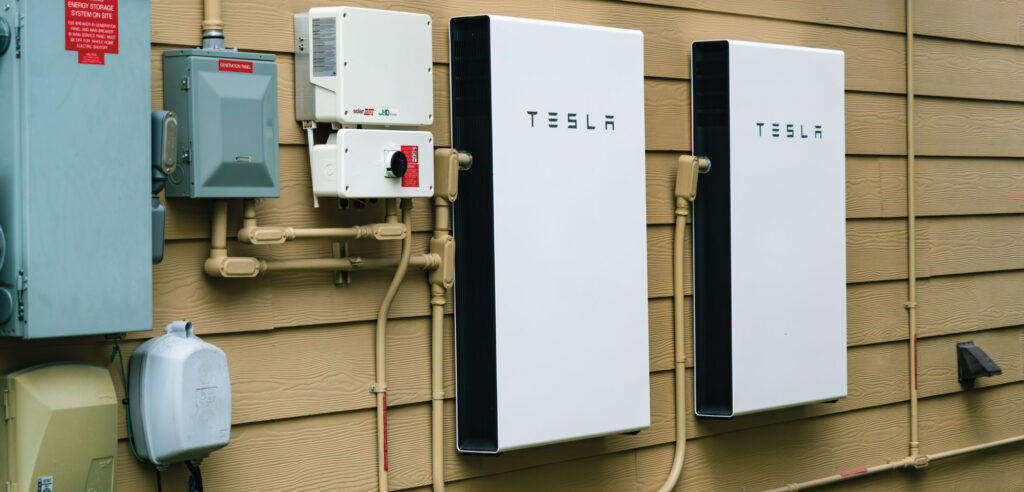
Dominant brands. Tesla Powerwall 3 (35-40% market share), Sungrow SBR (18-22%), BYD Battery-Box (14-17%), AlphaESS (8-10%), Redback and other alternatives make up the rest. Each brand attracts different buyer personas.
Average system size. 10 to 13 kWh for residential, 20 to 40 kWh for light commercial, scaling up for C&I.
Who buys batteries in 2026
Battery buyers cluster into four distinct personas. Your marketing needs to speak to the right one at the right moment.
| Persona | Primary motivator | Best channel |
|---|---|---|
| Existing solar (post-FIT cut) | Feed-in tariff cuts making export uneconomic | Email/CRM + Meta retargeting |
| New-build (tech-forward) | “Do it properly the first time” | Google Search + influencer/YouTube |
| Bill-pressured households | Rising electricity prices, blackout concerns | Meta prospecting + local radio |
| EV owners | Vehicle-to-home integration, charging optimisation | Search + EV community partnerships |
The highest-converting segment in nearly every Australian market is existing solar owners whose feed-in tariff just dropped. Retailers have been cutting FITs aggressively since 2023, which creates a constant trickle of households for whom battery economics just flipped.
The rebate landscape (and how to market around it)
Three rebate levers matter for Australian battery marketing in 2026:
1. Federal battery rebate. Applies to CEC-approved batteries installed by accredited installers. Scales with system size. Quoted as a dollar discount on the customer’s invoice. Check current rates via Clean Energy Regulator.
2. State-level schemes. NSW Battery Rebate, VIC Solar Homes battery loan, ACT Next Gen Energy Storage. Each has different eligibility. Update state-specific landing pages quarterly as terms change.
3. Virtual Power Plant (VPP) incentives. AGL, Origin, Amber and others pay households to aggregate battery capacity. Complex to explain but a genuine motivator for tech-forward buyers.
Always quote rebates as specific dollar discounts, never as “free government money”. The ACCC treats vague rebate representation as misleading conduct. Our CEC and ACCC compliance guide covers the specifics.
The battery-specific creative patterns that win
Solar creative focuses on rooftop transformation. Battery creative focuses on bill-shock avoidance, blackout resilience, and rebate value. Six creative patterns that consistently outperform for Australian battery campaigns:
1. The FIT drop explainer. 20-second video: “Your feed-in tariff just dropped from 15c to 4c. Here’s what a battery does to your bills now.” Works best in the first 6 weeks after a retailer announces a FIT cut.
2. The blackout moment. Phone-filmed customer showing “my neighbours lost power yesterday; I didn’t notice because of this battery”. Authentic fear-of-missing-out outperforms technical explanation 3 to 1.
3. The rebate countdown. “$X,XXX off battery installs ends [date]. Here’s what that means for a Sydney home with solar.” Urgency works when the rebate actually has a deadline; don’t fake urgency when it doesn’t.
4. The payback calculator. Interactive savings calculator on the landing page. Shows battery payback based on postcode + current bill + solar system size. Converts 2 to 3x higher than static pricing pages.
5. The brand comparison. “Tesla Powerwall 3 vs Sungrow vs BYD in 2026” carousel or explainer video. Commercial-intent, high engagement, feeds retargeting beautifully.
6. The EV angle. “Pair your EV with battery storage to cut your charging costs”. Small but growing segment with strong willingness to invest.
Channel mix for battery marketing
Batteries behave differently from solar in the channel mix. The “which channel” answer shifts based on whether you’re marketing to existing solar customers or net-new solar+battery prospects.
| Segment | Primary channel | Secondary | Support |
|---|---|---|---|
| Battery retrofit (existing solar) | Email/CRM + Meta retargeting | Google Search (brand terms) | Direct mail to high-FIT-drop suburbs |
| New solar+battery prospects | Google Search + Meta prospecting | YouTube explainers | Influencer / community partnership |
| EV battery buyers | EV community + Search | YouTube | Meta (narrow) |
| Commercial battery | LinkedIn + Google Search | Direct outbound | Industry PR |
Battery landing page structure
A battery landing page does two jobs a solar landing page doesn’t: it differentiates between brands, and it justifies a higher price with a more technical audience. Spine we use:
- Hero: “2026 battery rebate + FIT cut = your bills just changed. Get a battery quote in 60 seconds.”
- Interactive savings calculator: postcode + current monthly bill + existing solar size. Returns payback period and annual saving.
- Brand comparison block: Tesla Powerwall 3 vs Sungrow SBR vs BYD Battery-Box, with capacity, warranty, depth-of-discharge and indicative pricing.
- Rebate explainer: state-specific rebate banner (updated quarterly), with current dollar discount spelled out.
- Social proof: three video testimonials from battery customers, ideally in the prospect’s state.
- Technical detail: what happens in blackouts, how VPPs work, warranty terms, installation timeline.
- FAQ: 8 to 12 questions covering payback, brand choice, grid connection, battery placement, insurance impact.
See our solar landing page conversion elements guide for the broader CRO build.
Timing: when battery marketing wins
Battery demand is not flat year-round. Four predictable windows drive most demand spikes:
1. Post-summer bill shock (Feb-Mar). Peak electricity bills drop; households research battery as a response. Best Meta creative window of the year.
2. Post-winter bill shock (Aug-Sep). Same effect in southern states.
3. FIT announcement weeks. When retailers announce feed-in tariff reductions, battery search volume spikes 30-80 percent for 3-6 weeks.
4. Rebate change announcements. Federal or state rebate adjustments drive the largest and most predictable demand spikes. Pre-load creative and budget the week before an announcement.
The installers who win battery retrofit marketing are the ones who already have a past-customer email list segmented by install year, solar size, and retailer. When a retailer cuts their FIT, you email the affected customers within 72 hours. That email converts at 6 to 12 percent. No paid channel will ever match it.Uprise Digital, solar team
Battery-specific compliance considerations
Battery marketing carries compliance risks solar marketing doesn’t:
CEC battery endorsement. Installers need the CEC battery endorsement in addition to solar accreditation. Advertising battery installation without it is a policy violation.
AS/NZS 5139. Australian Standard for battery installations. Non-compliant installations expose both installer and customer to insurance and safety risks. Reference your compliance explicitly in marketing.
VPP disclosure. If you’re enrolling customers in a VPP as part of the install, disclose the terms clearly. ACCC has active enforcement on hidden VPP enrolment terms.
Warranty accuracy. Don’t conflate manufacturer warranty with workmanship warranty. A Tesla Powerwall has a 10-year product warranty from Tesla plus whatever workmanship warranty you offer.
See our solar compliance deep-dive for full coverage.
The battery marketing playbook: 90-day launch
- Days 1-10: Build CRM segmentation for existing solar customers (by install year, size, retailer). Launch battery landing pages (retrofit + new-system). Build state-specific rebate explainer pages.
- Days 11-20: Launch Google Search “Battery” campaign with brand-specific ad groups (Powerwall, Sungrow, BYD). Start Meta retargeting to existing solar customer CRM lookalikes.
- Days 21-35: Email batch-send to past solar customers introducing battery retrofit. Launch Meta prospecting with bill-shock and rebate creative.
- Days 36-55: First optimisation round: prune underperforming ad sets, double down on winning brand-specific creative, add YouTube explainer video to mid-funnel.
- Days 56-75: Add VPP-angle creative and EV-angle creative as narrow-audience experiments. Test influencer/partnership channel.
- Days 76-90: Formalise reporting cadence. Lock in seasonal calendar for FIT announcement response. Plan Year 2 creative refresh cadence.
Five mistakes that kill battery marketing accounts
1. Mixing battery and solar in one campaign. Different buyer, different search intent, different creative. Separate them.
2. Generic “get a battery quote” messaging. Battery buyers are more technical than solar buyers. Specificity about brand, capacity and payback converts dramatically better.
3. Not emailing past customers. The single highest-ROI battery channel is email to past solar customers. Most installers don’t do it.
4. Vague rebate claims. “Government pays for half your battery” will get your ad account suspended and may trigger ACCC action. Always specific dollar amounts with substantiation.
5. Slow quote response. Battery leads are higher-intent but longer-cycle. Slow first response kills the nurture path. Apply the 5-minute rule religiously.
Frequently asked questions
What’s a realistic battery lead CPL in Australia?
$140 to $340 for paid leads via Meta or Google. Below $80 via email-to-past-customer channel. Above $400 is a red flag.
Should I focus battery marketing on retrofit or new installs?
Both, but lean retrofit-heavy if you already have 500+ past solar customers. The marginal economics on retrofit email marketing are extraordinary.
Which battery brand should I anchor my marketing to?
Tesla Powerwall 3 has the highest search volume (and highest CPL). Sungrow SBR often has the best margin. BYD Battery-Box is the value play. Lead with the brand your customer base actually buys, not the highest-margin one for you.
Is VPP marketing worth it?
Narrow audience, but the customers who engage are higher-value and more technical. Worth a test budget; don’t lead your whole account with VPP messaging.